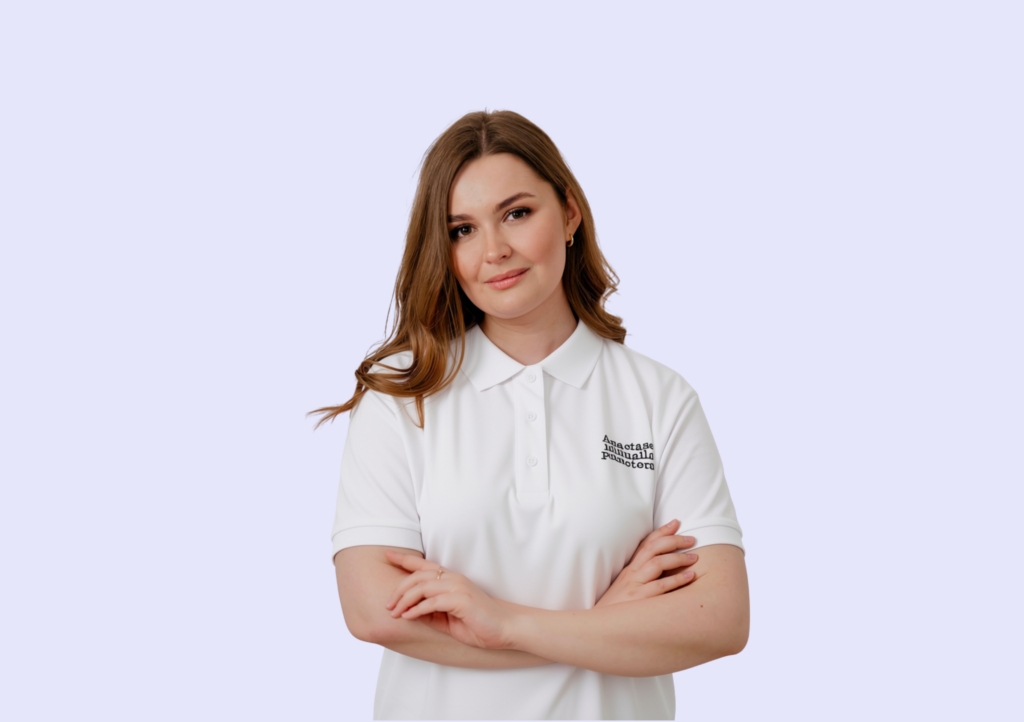
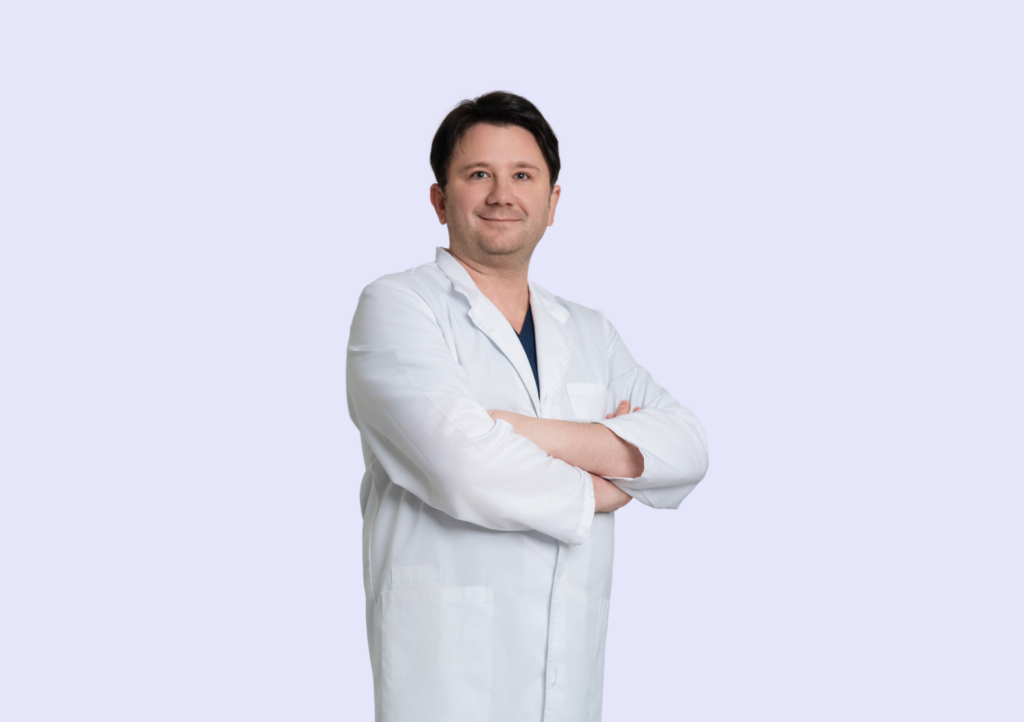
From the Tallinn Centre of Medical Specialists, founded by Dr Lee Padrik and Dr Kristina Kuhi, Terena is joining.
28. June 2026
Tallinn Centre of Medical Specialists has gained recognition in the capital: on the fifth floor of the Lasnamäe Health Centre, an increasing number of highly regarded and experienced specialists have been receiving patients year after year. Today, the clinic employs over 80 people, operates in several locations, and has made significant investments in implementing state-of-the-art technology and attracting top specialists.
A new chapter now begins for the clinic, as its operations continue under the name Terena.

It all began with an opportunity – and courage
The clinic’s founders, Dr Lee Padrik and Dr Kristina Kuhi, say that the name change was not driven by a desire for simple rebranding. On the contrary, the new name emerged only once the organisation had already reached its next stage of development. To tell this story, we need to go back to the early summer of 2018, when the newly established Tallinn Centre of Medical Specialists began operating by bringing together specialists from different fields under one clinic, as its name suggests.
The founders do not look back on the journey as a major business project, but rather as a mission to provide patients with the best possible specialist care. Naturally, this remains true today.
“The premises were there, and we had a lease to fulfil,” says Lee Padrik with a smile. “There was certainly a fair amount of chance and courage involved, but at some point it became clear that this simply had to be done. As conscientious people, we couldn’t do things halfway – it had to be done with full commitment.”
When the Tallinn Centre of Medical Specialists began operating in Lasnamäe Health Centre, there were not many specialist care options in the area. According to Kristina Kuhi, the idea from the very beginning was to create a place where different healthcare services would be integrated: general practitioners, rehabilitation, diagnostics, and specialist care forming one cohesive system.
“Lasnamäe has a population comparable to the city of Tartu,” she says. “Yet there were not many medical services available. So, for example, we brought mammography to this area. The location and the size of the district, as well as the supporting services of Lasnamäe Health Centre, clearly contributed to our growth.”
No compromises on quality
Today, the company employs over 80 people and operates in several locations. The most recent milestone expansion was the opening of a clinic in the Ülemiste Health Centre 2 building in early 2025. However, when speaking about growth, Dr Padrik and Dr Kuhi remain rather modest.
“The growth has been organic,” says Lee Padrik. “We have very consciously ensured that we do not compromise on quality, growing only as much as we can handle in terms of the additional workload.”
This principle recurs throughout the conversation. Whether discussing recruitment of doctors or investment in medical equipment, both always return to the same idea: they do not compromise on quality.
“Excellent specialists need excellent equipment – we do not make concessions in that regard,” Padrik emphasises. “We trust our doctors, who as experts in their fields know which equipment is best for patient diagnostics. After all, there is no point in having an empty office.”
Kuhi adds that good doctors are never without patients, and good doctors also attract other good doctors. “One of our strengths is that the clinic was founded by doctors. We understand what doctors need in order to work with dedication and provide the highest possible quality. Today, our doctors also no longer work as isolated specialists; we have small teams where knowledge and experience are shared. Of course, we are flexible and take their schedules and preferences into account – we want the team to be motivated.”
The early years, however, were far less structured than the current centre might suggest. Both recall a time when everyone had to get their hands dirty.
“We really did every job here,” recalls Lee Padrik. “At the beginning, that was simply necessary for survival. And as we said – what else could we do as conscientious people?”
“I even sat at reception,” laughs Kristina Kuhi. “Patients still needed to be served.”
Why a new name?
The clinic has made significant investments in modern medical technology, information systems, and recruiting new specialists.
“A very important milestone was opening the clinic in the Ülemiste Health Centre,” says Kuhi. “We are particularly pleased with the investment in a state-of-the-art MRI machine, which enables all complex and specialised MRI examinations and ensures patient comfort.”
At the same time, it became increasingly clear that the name “Tallinn Centre of Medical Specialists” no longer fully reflected the organisation’s current nature.
“That name has worked very well – or rather, the team has built it into a strong brand,” says Lee Padrik. “But at some point, we realised we are no longer just one specialist centre in Tallinn. Our services are broader, we are no longer limited to one location, and the organisation has grown and evolved.”
This led to the decision to adopt a new name – Terena. But it was not an easy decision.
“There is always an emotional attachment to a long-standing name,” admits Kristina Kuhi. “But in a way, it feels like a new stage of life. You feel ready to move forward. Now that we have achieved a strong position among healthcare providers, it is bittersweet to change the name, but it is the next step in life. Like getting married and taking a new name – you carry it into the next stage with pride and dignity.”
Both emphasise that the new name does not mean abandoning the existing identity, but rather evolving it further. “We no longer see the clinic simply as a specialist centre, but as a health partner.”
By the end of the conversation, we return to a theme that has run through the entire interview in different words: patients must receive the best diagnostic and treatment options, and they must feel understood.
“Cutting-edge medicine can be both highly scientific and deeply human,” emphasises Lee Padrik. “That is exactly what we do at Terena.”